Culture Deep Dive
India: A Civilization in Color
One of the world's oldest continuous civilizations — a subcontinent of 22 official languages, countless traditions, and extraordinary spiritual depth.
One of the world's oldest continuous civilizations — a subcontinent of 22 official languages, countless traditions, and extraordinary spiritual depth.
India is not one country — it is a continent. The Indian subcontinent gave birth to one of humanity's oldest continuous civilizations: the Indus Valley settlements at Harappa and Mohenjo-daro date back to 3300 BCE, predating many of the cultures that now dominate global historical consciousness. The mathematical concept of zero, the decimal system, chess, and cotton textile manufacturing all trace their origins to the Indian subcontinent. This is a civilization that has been generating ideas for millennia.
The diversity that defines modern India defies summary. From the tropical backwaters of Kerala to the Himalayan valleys of Ladakh, from the desert forts of Rajasthan to the rainforest coasts of Meghalaya — each region carries its own language, cuisine, music, dress, architecture, and relationship with the sacred. Hindi is not India's national language; India has no single national language, only 22 officially recognized ones and thousands of dialects. This is not disunity. It is a form of plurality that the world has rarely seen.
Beneath this diversity runs a common philosophical current: the principle of Dharma, or right action in accordance with cosmic order. This Vedic concept has threaded through thousands of years of Hindu, Buddhist, Jain, and Sikh thought, producing a civilization where the spiritual and the material are not opposed but interwoven — where the market and the temple occupy the same courtyard, and where a street vendor's morning prayers are as important as his merchandise.
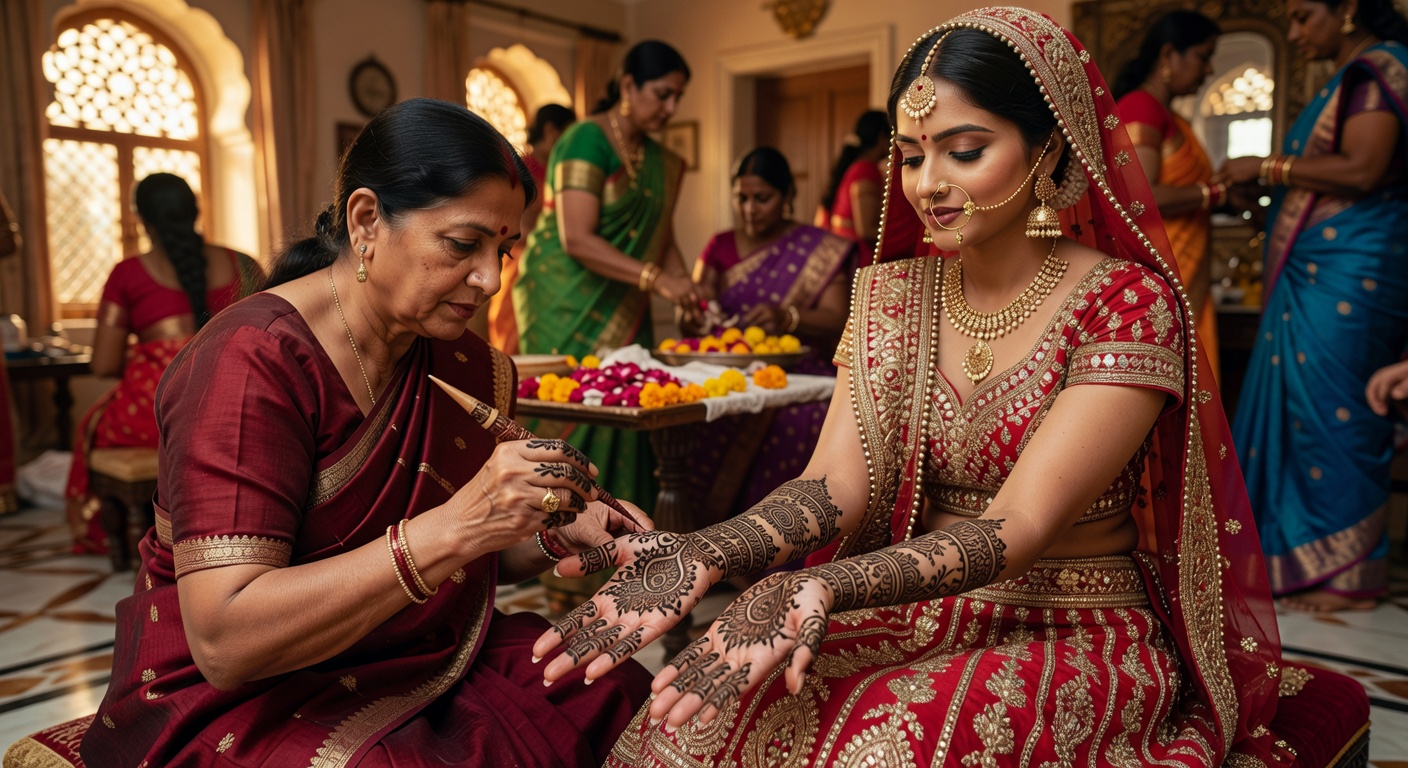
India has more than 40 national festivals
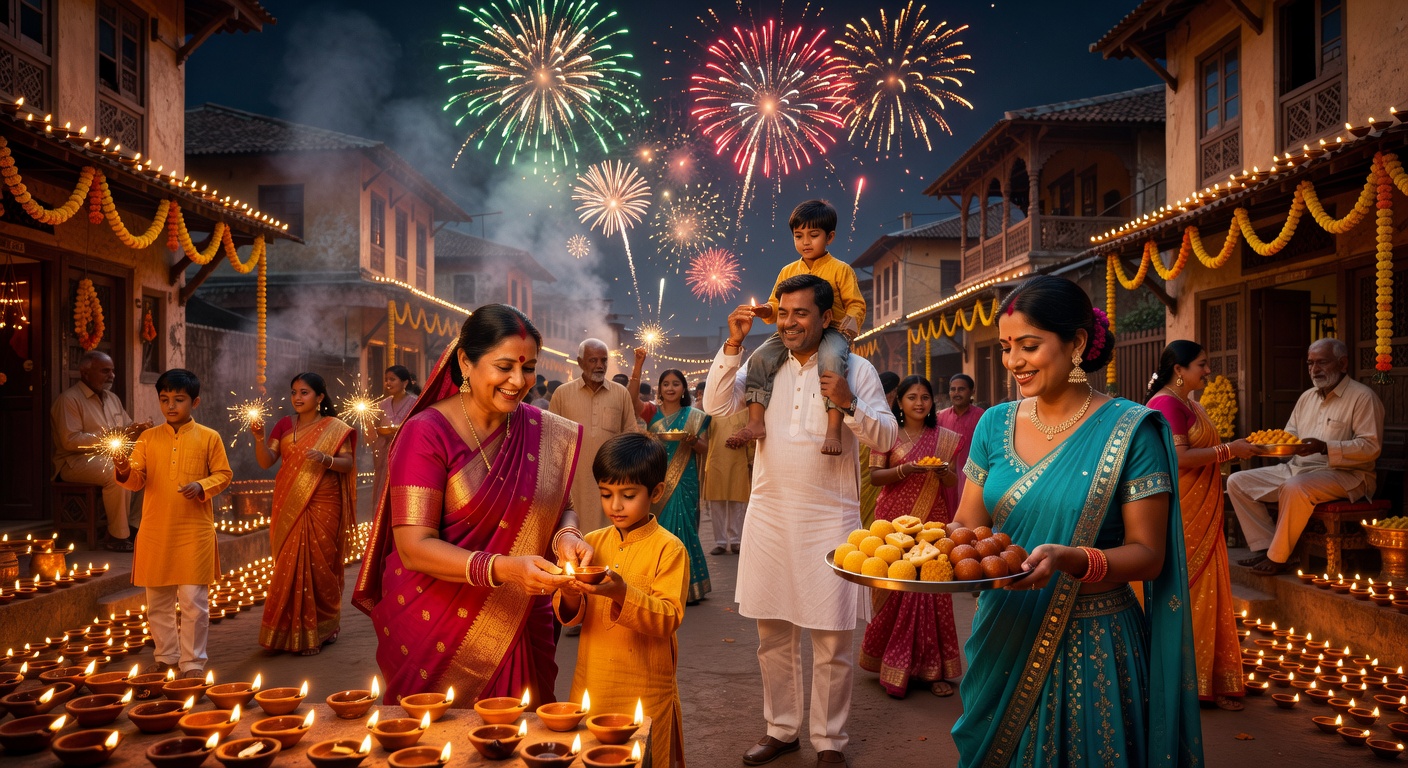
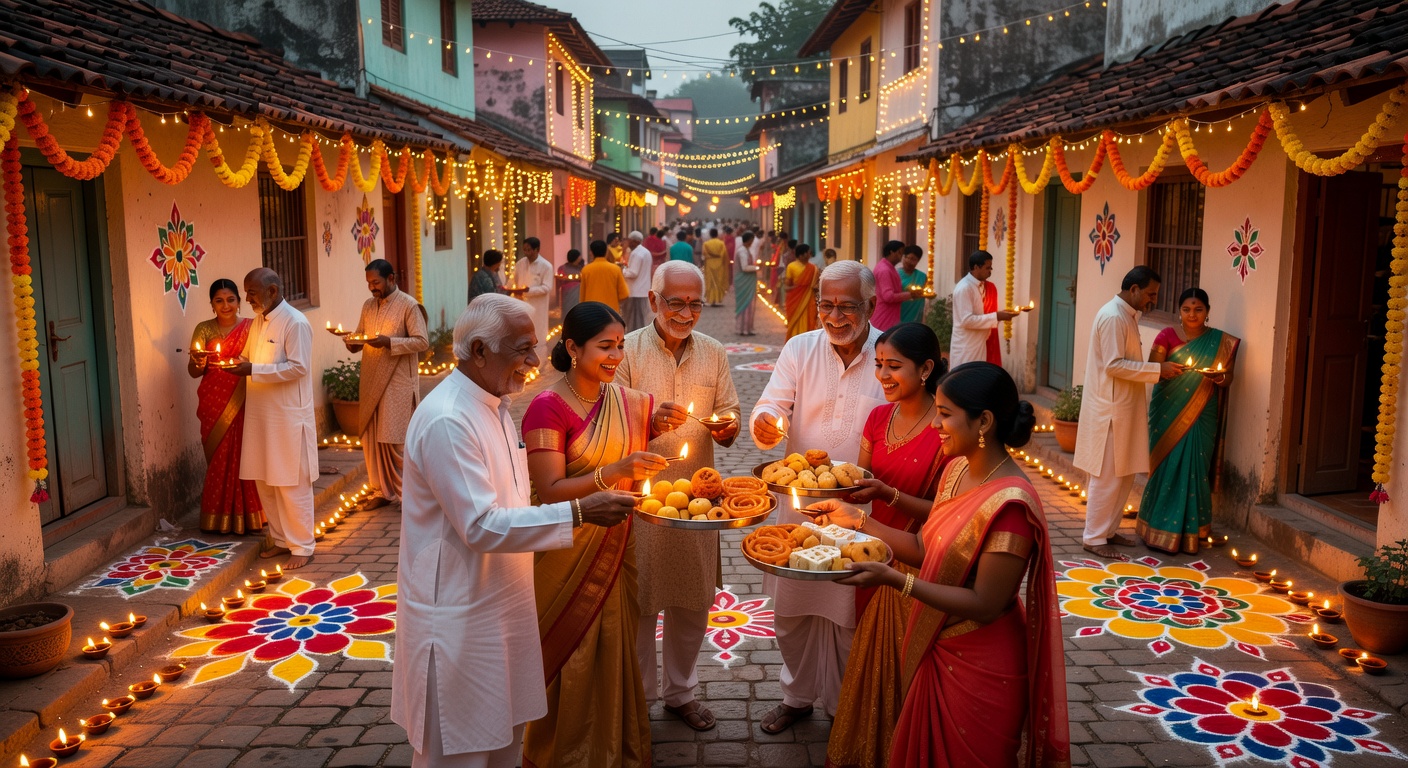
The Festival of Lights is the most widely celebrated Hindu festival, marking the return of Lord Rama to Ayodhya and the triumph of light over darkness. Across five days, homes are illuminated with oil lamps and fireworks fill the night sky, while families exchange sweets and pray to Lakshmi, goddess of wealth.
Explore Diwali →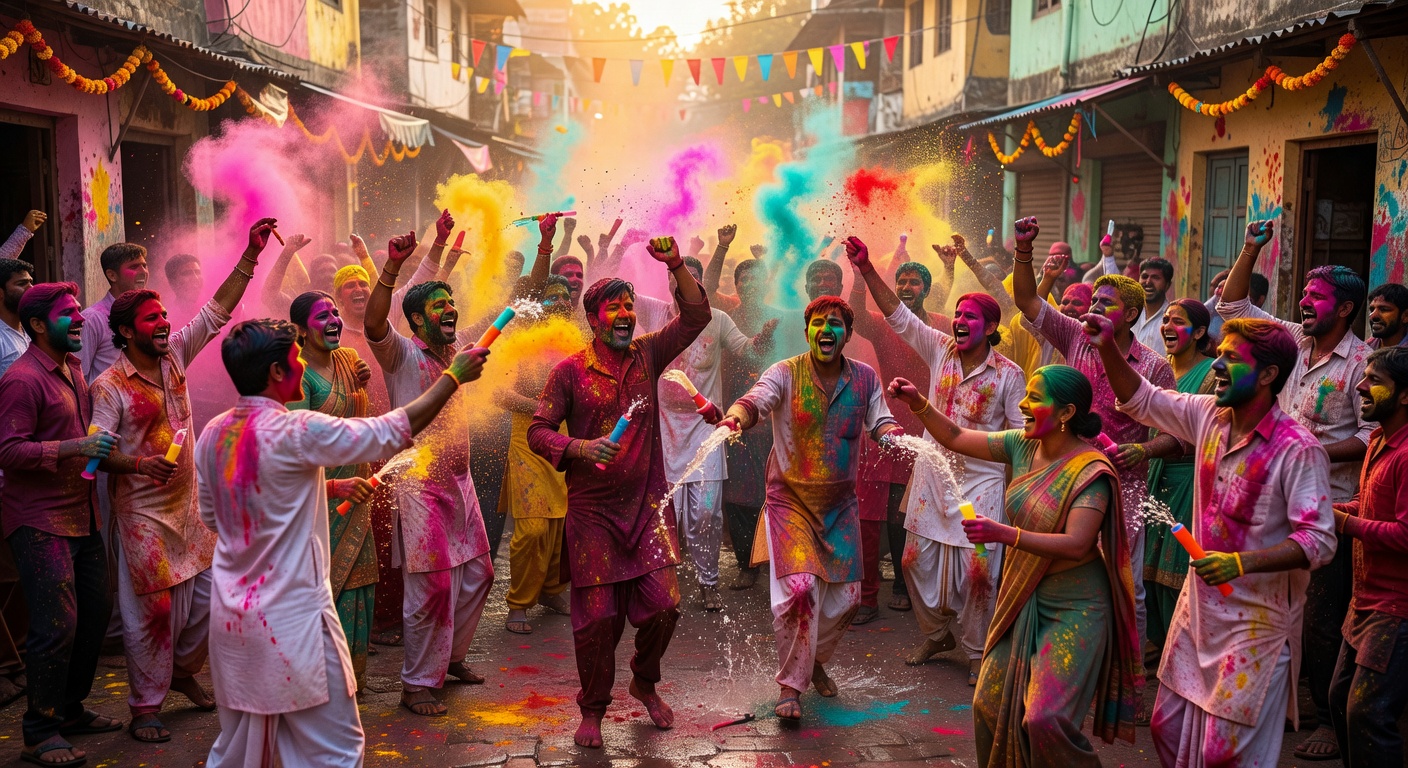
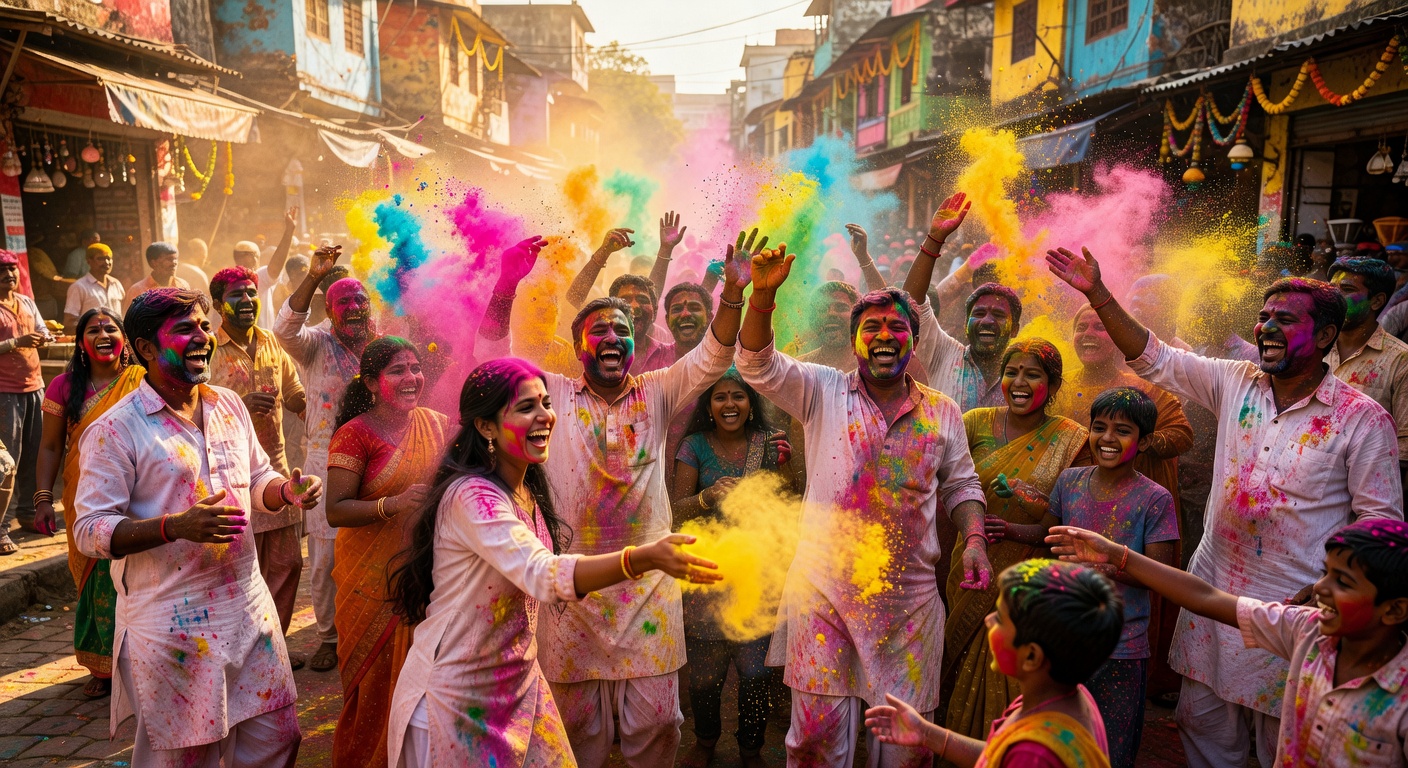
The Festival of Colors announces the arrival of spring with an explosion of colored powders, water, music, and laughter. Holi dismantles social hierarchies for a day: rich and poor, young and old are equally drenched in color. It commemorates the divine love of Radha and Krishna and the destruction of the demoness Holika.
Nine nights of devotion to the goddess Durga in her nine manifestations. In Gujarat, Navratri transforms into an all-night dance festival of Garba and Dandiya Raas, where thousands of performers in traditional dress circle in concentric rings to increasingly fast rhythms. It is one of the great collective experiences in world culture.
India's harvest festivals vary beautifully by region: Pongal in Tamil Nadu, Makar Sankranti across the north and west, Lohri in Punjab, Bihu in Assam. Each marks the sun's northward journey and the gratitude of agricultural communities — festivals born from the earth and returned to it each year.
The principle of non-harm toward all living beings, foundational to Hindu, Jain, and Buddhist ethics. Gandhi transformed it into a political philosophy that changed history.
One's sacred duty — the code of conduct that upholds cosmic order. Dharma is contextual, varying by age, caste, gender, and circumstance, making ethics a living conversation rather than a fixed law.
The ultimate spiritual goal across India's traditions — freedom from the cycle of birth and death, the dissolution of the individual self into universal consciousness. The entire culture is oriented toward this horizon.
India's eight classical dance forms — Bharatanatyam, Kathak, Odissi, Manipuri, Kuchipudi, Mohiniyattam, Sattriya, and Kathakali — are not entertainment but devotional practices. Each movement of the hand (mudra) communicates a specific meaning from a vocabulary of thousands of gestures developed over millennia.
India's textile heritage is staggering in its diversity: Varanasi silk brocades woven on traditional handlooms, Ajrakh block printing from Kutch, Kantha embroidery from Bengal, Pashmina shawls from Kashmir. Each district has its own textile identity, and the skills are passed through families across generations.
Each of India's 28 states constitutes its own food universe: the coconut-based curries of Kerala, the mustard-heavy preparations of Bengal, the tandoor breads of Punjab, the tamarind-laced lentils of Tamil Nadu. Indian cuisine is not one cuisine — it is a continent of flavors evolving in real time.
India rewards those who travel slowly, listen carefully, and let go of preconceptions. Here are cultural insights that will deepen your experience.
The spiritual heart of India — where the ancient city meets the sacred river and life and death are observed without pretense.
Explore Varanasi →